
Digital Validation
"Every new product and site multiplies our validation cost." When the model is paper-first, the only way to keep up is to add people, and inspection readiness gets harder. There is a better structure.
The problem in your words
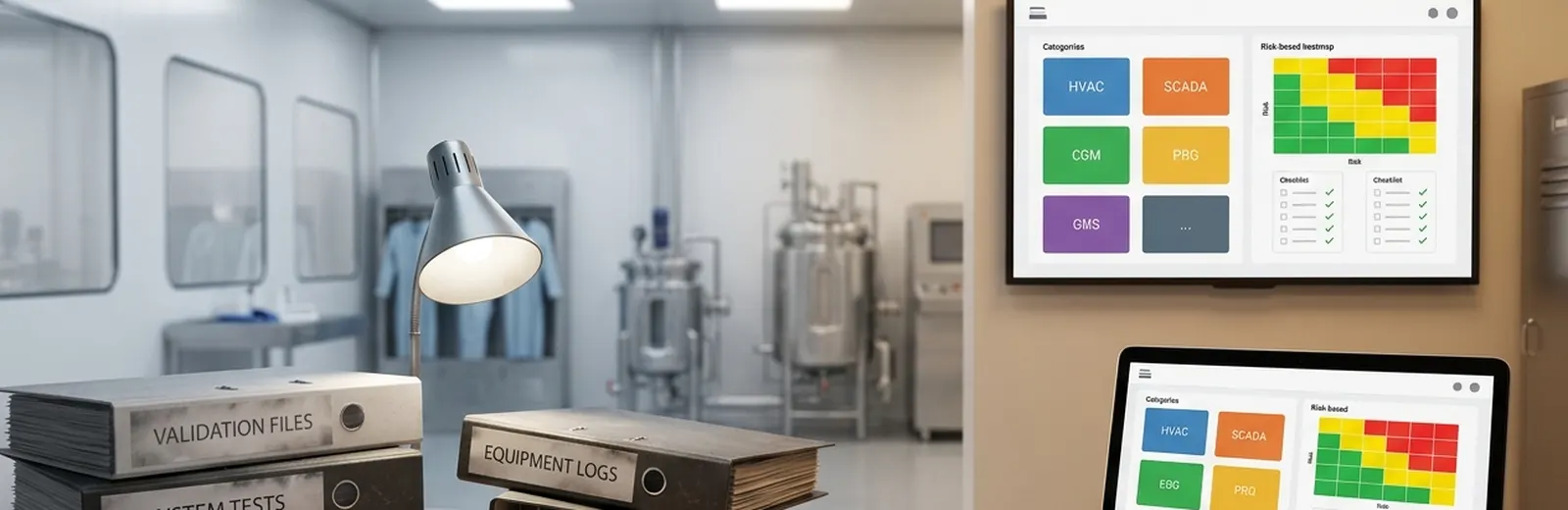
Validation work grows with every system, product and site. Paper-first, template-heavy practice means more headcount just to stand still, and the evidence is scattered when an inspector asks for it. The cost problem in validation is really a structure problem, and tooling alone will not fix it; I wrote about why in AI will not remove documentation from validation.
What I do here
- I assess the current validation estate and design the paperless backbone it should run on.
- I run the platform selection vendor-neutral, so the recommendation follows your risk and estate, never a commission.
- I set the risk model that decides where scripted testing is worth it and where vendor or unscripted evidence carries.
- I build the automation backlog: the routine steps to hand to RPA first, and the order to take them in.
- I plan the multi-site rollout so every site lands on the same backbone without a local fork.
How I approach it
The Enterprise Paperless Validation backbone turns validation into a digital flow where effort follows risk and the routine work is automated: intended use and risk classification set the assurance level, specification and configuration are sized to that risk, risk-based assurance applies scripted testing where it matters and vendor or unscripted evidence elsewhere, release is defensible and traceable, operate-and-monitor brings periodic review with revalidation triggers, and retirement is controlled. Running underneath all of it: a paperless platform, RPA automation, and audit-ready electronic records.
The automation is vendor-neutral. Where a programme needs hands, I bring vetted delivery partners and stay product-agnostic, so the recommendation is always about your risk, not a tool I am tied to.
Automation removes the manual lift that adds no quality, and frees people for judgment. A digital validation backbone is the rails that CSA, cloud and AI all run on.
What you get
- A digital validation blueprint: platform, risk model, records architecture and rollout sequence.
- A vendor-neutral platform recommendation with a documented rationale.
- Right-sized templates and an automation backlog your team can execute.
- A rollout plan that keeps every site on one backbone, with local deltas controlled.
From a comparable programme across 40+ sites
Outcomes from a global pharmaceutical client, rewritten as an anonymised engagement. No employer or client is named.
Related services
Questions leaders ask
What is digital validation (eValidation)?
Digital validation, also called eValidation or paperless validation, manages the whole validation lifecycle electronically: specifications, risk assessments, test execution, e-signatures and the audit trail on one validated platform under 21 CFR Part 11 and EU Annex 11, with routine work automated.
What does moving from paper to digital validation change?
On a comparable 40-plus-site programme, going paperless removed around six million paper records a year and made validation cycles up to 45% faster, while inspection evidence became producible in minutes instead of days.
Which tool should we use for digital validation?
Several platforms can carry a digital validation lifecycle well. The choice should follow your risk profile, estate and integration needs, which is why this advisory stays vendor-neutral: the recommendation is about your requirements, never a product commission.
Stop adding people to keep up.
Book a conversation and bring your validation backlog.
Book a conversation See the paperless validation framework