
AI QMS: the AI-enabled quality system
"We want AI inside quality, but we cannot risk an inspection finding." This is the one most clients arrive with, and it is the work I know best.
Deviation and RCA assistant
Drafts the investigation narrative and proposes a root cause for a human to accept, edit or reject.
Query assistant
Answers recurring quality and validation questions from controlled sources, with citations.
CAPA support tool
Surfaces similar past events and flags likely repeat causes before a CAPA is closed.
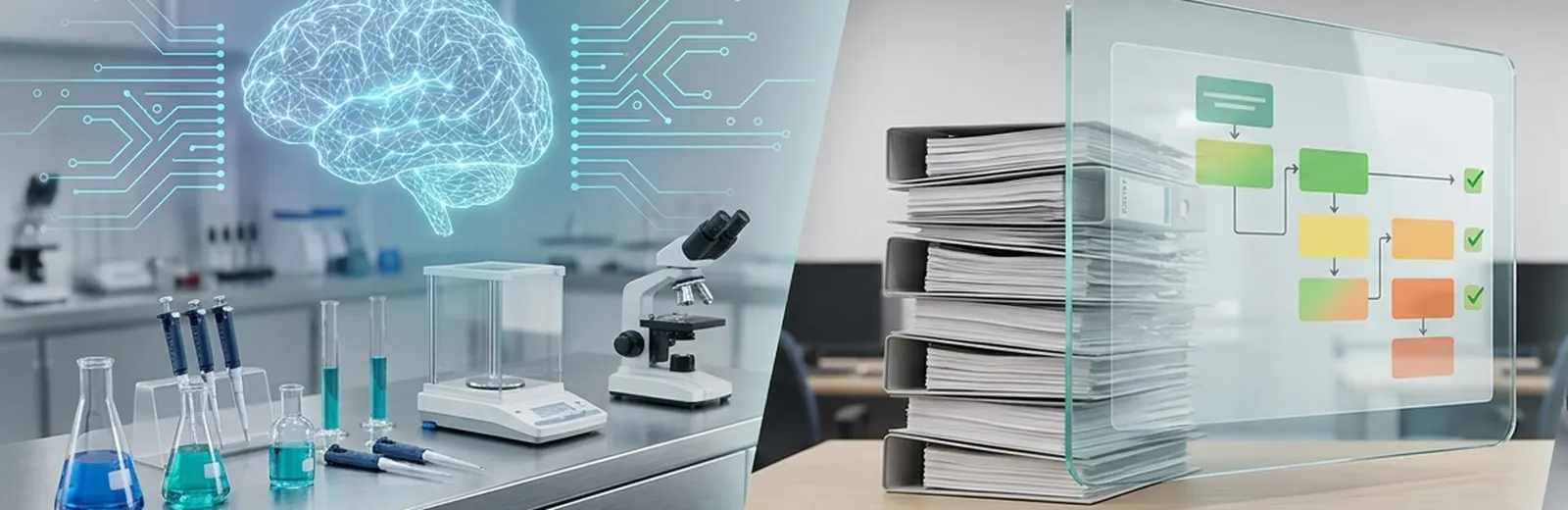
The problem in your words
Your eQMS is digital, yet deviations still take days to author, the same queries get re-answered, and CAPAs repeat. Everyone can see AI would help. No one can tell you how to put it into a GxP process and still defend it to an inspector who has never seen the model. So the pilots stall in a sandbox, and the value stays on the slide.
How I approach it
AI belongs on the highest-volume, lowest-judgment steps first, where it removes manual lift without removing human decision. Each tool is classified by its impact on quality and patient safety and by how much autonomy it holds, then validated to that tier. Every AI-influenced decision records its input, output, reviewer and disposition, so the audit trail tells the whole story on its own. That is the difference between a demo and a deployment.
The structure underneath is the AI Governance Stack: a regulatory spine, a reference architecture, four-tier risk classification, a governance operating model, a validation master plan, and live monitoring. Decision integrity on top of data integrity.
More than 20 AI applications validated in live GxP quality use, and 9 of them taken through health-authority inspection, 6 FDA and 3 MHRA, with zero compliance observations.
What gets deployed
- A deviation and RCA assistant that drafts the investigation narrative and proposes a root cause for a human to accept, edit or reject.
- A query assistant that answers recurring quality and validation questions from controlled sources, with citations.
- A CAPA support tool that surfaces similar past events and flags likely repeat causes before a CAPA is closed.
Each is validated, monitored for drift, and wrapped in a governance model that an inspector can follow without your help. For what this shift looks like when the regulator builds its own assistant, see ELSA is coming: what changes.
From a comparable enterprise deployment
Outcomes from a global pharmaceutical client, rewritten as an anonymised engagement. No employer or client is named.
Related services
Questions leaders ask
Where should AI start inside a GxP quality system?
On high-volume, low-judgment steps where a human keeps the decision: drafting deviation investigations, answering recurring quality queries from controlled sources, and surfacing similar past events before a CAPA closes. They deliver visible relief quickly, validate to a defensible tier, and build the operating muscle for anything more ambitious.
How is an AI deviation assistant validated?
Classify it first on impact and autonomy, then validate to that tier: documented intended use, training-data lineage, model-specific test evidence and a human-in-the-loop review step. After go-live, drift and performance are monitored, and every AI-influenced decision records its input, output, reviewer and disposition.
Will inspectors accept AI-assisted quality records?
In my experience, yes, when the record tells the whole story on its own: what the model saw, what it proposed, who reviewed it and what was decided. Inspectors concentrate on whether a qualified human owned the disposition and whether the system is monitored, so build the audit trail to answer exactly that.
Is your AI inspection-ready, or just impressive?
Take the AI Readiness Check, or book a conversation and bring your hardest use case.
Book a conversation Take the readiness check